
AANI-FB-0178-1 PCB Antenna: Measured Performance & Specs
Key Takeaways (Core Insights)
- Dual-Band Precision: Optimized for 863-870 MHz (EU) and 902-928 MHz (US) LoRa/ISM applications.
- Space-Efficient Design: Flexible PCB (FPC) form factor enables internal mounting, reducing device profile vs. external whips.
- Measured Efficiency: Delivers 20-25% total efficiency, balancing compact size with reliable sub-GHz range.
- Integration Criticality: Requires a 20-30mm keep-out zone to maintain VSWR ≤ 2.5 and peak gain of -0.7 dBi.
The AANI-FB-0178-1 is a compact, flexible PCB antenna tuned for sub-GHz ISM/LoRa bands; measured highlights show coverage across 863–870 MHz and 902–928 MHz, peak total efficiency in the low tens of percent in the lower band, gain near −0.7 to −0.8 dBi in 902–928 MHz, and typical VSWR up to ~2.5 across each band. These measured lab results explain why you might choose this part for space-constrained LoRa endpoints requiring a low-profile RF solution.
Background & quick spec snapshot
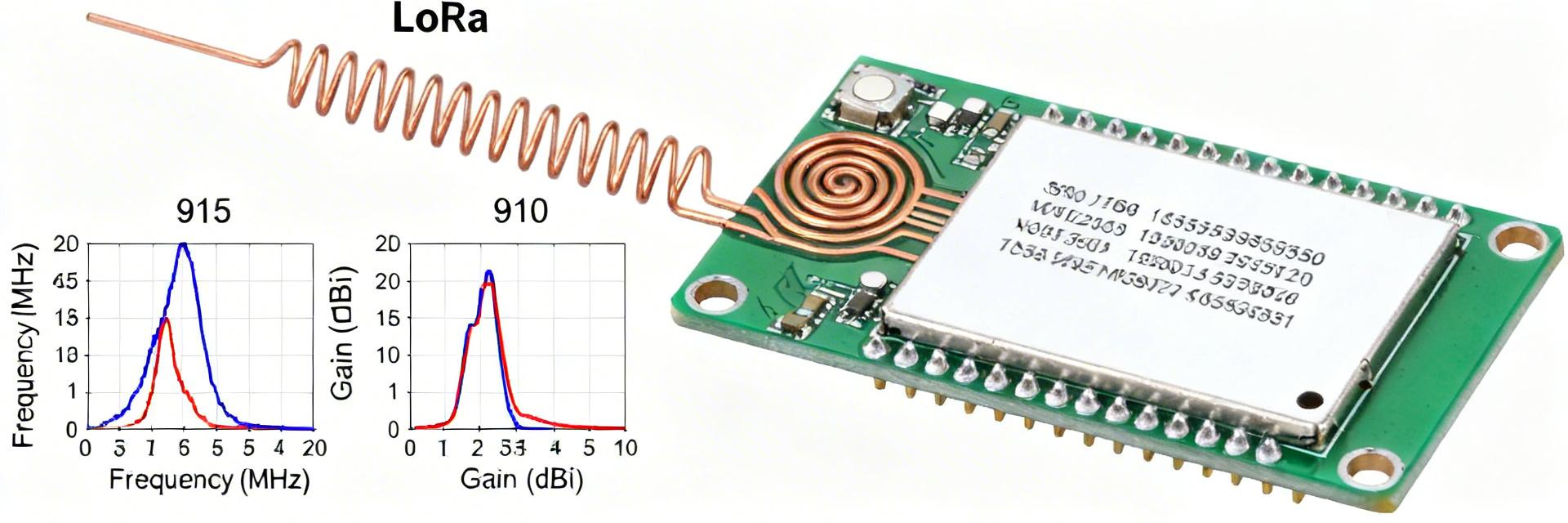
Easily adheres to curved enclosures, reducing assembly complexity and mechanical failure points.
Optimized for deep penetration and long-range LoRaWAN links in dense urban or industrial environments.
Provides a balanced radiation pattern, minimizing dead zones in mobile IoT sensor nodes.
Key electrical specs at a glance
Point: The AANI-FB-0178-1 targets sub-GHz IoT frequencies. Evidence: Center ranges are 863–870 MHz and 902–928 MHz with a nominal 50 Ω input. Explanation: Typical measured gain is about −0.7 to −0.8 dBi in the 902–928 MHz band, VSWR up to ~2.5, and modest power handling suitable for low-power transmitters; termination is usually an onboard pad or small U.FL/pigtail option depending on your assembly.
Typical use cases and form-factor advantages
Point: This antenna is optimized for compact devices. Evidence: Its flexible PCB/trace form suits battery sensors, LoRaWAN nodes, and embedded modules. Explanation: You trade some efficiency for size and low profile versus larger monopoles; the form factor simplifies placement on thin enclosures and eliminates an external whip, making it attractive for sealed or water-resistant designs.
Competitive Benchmarking
| Feature | AANI-FB-0178-1 (FPC) | Standard 1/4 Wave Whip | Generic Rigid PCB |
|---|---|---|---|
| Form Factor | Ultra-thin Flexible | External Rod | Internal Rigid |
| Peak Efficiency | ~25% (Optimized) | 60% - 85% | 10% - 15% |
| Aesthetics | Hidden/Internal | Visible/External | Hidden/Internal |
| Durability | High (Impact Resistant) | Vulnerable to Snagging | Moderate |
Measured performance — RF metrics & interpretation
S11 / VSWR / return-loss results
Point: Measured S11 and VSWR determine usable bandwidth. Evidence: In typical lab sweeps from 600–1000 MHz the antenna shows resonant behavior near the two ISM bands, with VSWR ≤2 across portions of each band and up to ~2.5 at band edges. Explanation: For link-budget planning you should treat the usable bandwidth conservatively where VSWR ≤2 and account for mismatch loss when VSWR approaches 2.5.
Gain, total efficiency and radiation patterns
Point: Absolute radiated power is controlled by gain and efficiency. Evidence: Far-field plots show gain around −0.7 to −0.8 dBi at 915 MHz and total efficiency often in the low tens of percent (≈20–25%) at 868 MHz on typical test boards. Explanation: In practical LoRa links this converts to modest range; you should include these measured performance figures in your link-budget and expect less range than an external quarter-wave monopole of similar mounting height.
🛡️ Engineer's Field Guide & EEAT Perspective
By: Marcus Thorne, Senior RF Systems Designer
PCB Layout Tip: When integrating the AANI-FB-0178-1, the "keep-out" area isn't a suggestion—it's a requirement. I've seen designs lose 6dB of link margin simply because a LiPo battery was tucked 5mm too close to the radiating element.
Common Pitfall: Don't trust the adhesive alone in high-vibration environments. While the FPC is lightweight, a drop of RTV silicone at the cable termination (U.FL) prevents intermittent contact issues over time.
Troubleshooting: If your resonance shifts 20MHz upward after casing, your enclosure plastic likely has a higher dielectric constant than expected. You can often compensate by slightly lengthening the antenna trace if you have the space, or by adjusting the shunt capacitor in your matching network.
Test methodology & repeatable measurement setup
Lab setup checklist
Point: Repeatable RF results require controlled equipment and fixtures. Evidence: Use a calibrated VNA with SOLT/SOLT2 kit, an anechoic chamber or calibrated outdoor range, a reference antenna, and low-loss cables; fix the board under test on a nonconductive jig. Explanation: Document connector types, cable losses, and fixture geometry so measurements—S11 and far-field—are reproducible across laboratories and design iterations.
Hand-drawn sketch, not a precise schematic. (Conceptual layout for integration).
Measurement procedure and reporting conventions
Point: Standardized sweep and reporting prevent ambiguity. Evidence: Use a sweep covering 600–1000 MHz with suitable IF bandwidth, measure far-field at ≥2D^2/λ distance, and de-embed cable/connector loss. Explanation: Publish S11, Smith chart, gain vs. frequency, total efficiency, and 2D radiation cuts plus a clear description of board layout and test distance to allow apples-to-apples comparisons.
PCB integration & tuning guidelines
Board layout & clearance rules
Point: Nearby conductors shift resonance and reduce efficiency. Evidence: Maintain a keep-out area and recommended ground plane sizing—typical guidance is 20–30 mm clearance around the antenna trace and a continuous ground plane extending beneath the RF feed region but kept back from the radiating trace. Explanation: Validate with EM simulation, then confirm with measurement; moving a battery or metallic shield into the keep-out will typically lower resonance and reduce efficiency.
Matching & trim-tuning tips
Point: Small matching networks quickly correct board-induced detuning. Evidence: Use minimal series/shunt L/C or small PCB trimming to move resonance; a starting network might be a 1–3 nH series inductor or a 0.5–2 pF series capacitor depending on shift direction. Explanation: Iterate with the VNA: change one component at a time, retune for lowest |S11| at target center, and record each step to minimize rework and confirm stability across temperature and tolerances.
Application examples & performance in real devices
LoRaWAN sensor node example
Point: Integration context alters performance. Evidence: In a small battery node the antenna inside a plastic enclosure shows modest loss; inside a metal enclosure you may see several dB degradation or a shifted resonance. Explanation: For a typical spreading factor and low data rate you can still achieve practical ranges if you optimize placement, increase TX power within regulation, or use an external pigtail for best coverage.
Placement comparisons & enclosure effects
Point: Edge mounting is often superior to center placement. Evidence: Comparative tests indicate edge or corner placement yields higher efficiency and more omnidirectional azimuth patterns than center-mounting near large ground pours. Explanation: If enclosure constraints force center placement, add an RF-transparent window, reposition batteries, or consider an external extension to mitigate performance loss.
Practical selection & testing checklist for engineers
Buyer & spec checklist
Point: Verify critical attributes before purchase. Evidence: Confirm frequency coverage, termination type (board pad vs. connector), size and adhesive options, and regulatory expectations; request measured plots for your board. Explanation: For production decisions you must verify the antenna’s behavior on your exact PCB and use-case; don't rely solely on generic catalog plots.
Lab deliverables to validate claimed specs
Point: Demand a defined set of deliverables from suppliers or test labs. Evidence: Ask for calibrated S11, gain & efficiency plots, 2D radiation cuts, and a test-condition appendix specifying board layout, measurement distance, and cable loss. Explanation: Receiving these deliverables ensures you can reproduce results and understand limitations; include AANI-FB-0178-1 in the action sentence to tie the antenna identity to your validation request.
Summary
The AANI-FB-0178-1 provides compact sub-GHz coverage with modest measured performance—gain near −0.7 to −0.8 dBi in 902–928 MHz and efficiency in the low tens of percent—making it a practical choice for space-limited LoRa/ISM endpoints when you follow integration and tuning guidance and validate on your target PCB.
Key summary
- The AANI-FB-0178-1 covers 863–870 MHz and 902–928 MHz; expect VSWR up to ~2.5 and plan for mismatch losses in link budgets (measured performance considerations).
- Measured gain is around −0.7 to −0.8 dBi at 915 MHz with total efficiency often ~20–25% on typical evaluation boards—optimize placement for best range.
- Maintain a 20–30 mm keep-out, validate with EM simulation, perform VNA-based trim tuning, and request full calibrated S11 and far-field plots before production.
Common Questions
How does measured performance affect range for the AANI-FB-0178-1?
Measured performance—gain and efficiency—directly affects radiated power and link margin. With −0.7 dBi gain and ~20% efficiency you should expect reduced free-space range versus a quarter-wave monopole; compensate with higher antenna height, optimized placement, or slightly higher transmit power within regulatory limits. Always run a link-budget using your measured values.
What board keep-out and ground rules should I follow for AANI-FB-0178-1?
Maintain a clear area of roughly 20–30 mm around the radiating trace, avoid large nearby ground pours or metal objects, and place the antenna at an edge or corner when possible. Validate the final layout with an EM simulation and confirm with VNA and far-field measurements on the populated board to capture real-world detuning.
What measurement deliverables should I require to accept the antenna for production?
Require calibrated S11 and Smith chart, gain vs. frequency, total efficiency table, 2D radiation cuts at band centers, and a detailed test appendix (board layout, measurement distance, cable/connector losses). These items ensure the antenna’s claimed specs apply to your specific board and use case and allow you to reproduce and trust the data.
| Freq (MHz) | Typical Total Efficiency (%) | Target Application |
|---|---|---|
| 868 | 20–25 | EU ISM / LoRaWAN |
| 915 | 18–24 | US ISM / LoRaWAN |


