Real-time inventory feeds can swing widely for passive parts, creating acute procurement risk for time-sensitive designs. Feeds often show thousands of units at one moment and zero hours later, driven by channel allocations and ERP sync delays. Engineers and buyers must treat any single snapshot as provisional. This guide frames the electrical and mechanical specs for the GMT10CG390J50NT4 MLCC and prescribes a live-check cadence and verification steps to reduce last-minute board redesigns.
This article is data-first and action-oriented. Every recommendation ties to verifiable checks (API queries, ATP requests, and packaging lot verification). Use the embedded checks, polling cadences, and PO checklist below to translate a specifications table into supply-chain confidence for prototypes and production alike.
Why GMT10CG390J50NT4 matters for your design (Background)

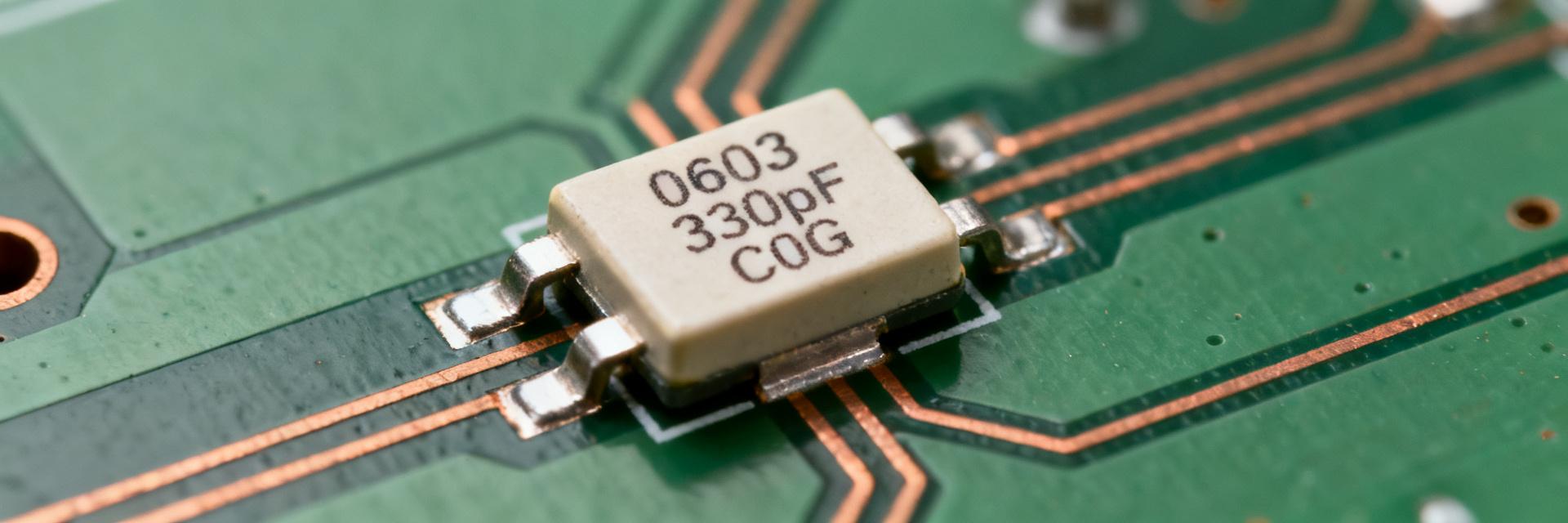
The GMT10CG390J50NT4 is a C0G/NP0 dielectric multilayer ceramic capacitor targeted at circuits requiring extremely stable capacitance. Its nominal 39 pF value with tight tolerance and a 50 V rating makes it suitable where low loss, low drift, and predictable self-resonance matter. Designers choosing this part prioritize temperature stability, low dissipation factor, and minimal aging over lower-cost high-K dielectrics; that choice reduces amplitude and phase shift in timing, RF, and precision analog circuits while constraining package and board-layout trade-offs.
Component role & product overview
The part functions primarily as a precision decoupling or timing capacitor. C0G/NP0 characteristics yield near-zero ppm/°C temperature coefficient and minimal dielectric absorption. This behavior preserves filter corner frequencies and timing integrity across extreme operating conditions, making this part an ideal candidate where capacitance stability directly affects system performance.
Typical applications & design trade-offs
Common use-cases include RF matching, precision timing, and high-Q filter sections. Engineers select C0G components when stability and low dissipation factor matter more than volumetric capacitance. Trade-offs include larger board area per capacitance compared with X7R/Y5V types and potentially higher unit cost; design teams should weigh stability versus size and budget and consider footprint and warranty of supply.
GMT10CG390J50NT4 key specifications (Specs) — quick reference
A compact specs table and the right electrical fields let procurement and engineering communicate unambiguously. Capturing capacitance, tolerance, rated voltage, dielectric, dissipation factor, insulation resistance, and SRF in a copyable table prevents mismatched BOM items. Mechanical fields are included so manufacturing can confirm placement and test fixtures without ambiguity.
| Field | Expected Value / Note |
|---|---|
| Capacitance | 39 pF (nominal) |
| Tolerance | ±5% typical (specify per lot) |
| Rated Voltage | 50 V DC |
| Dielectric | C0G / NP0 |
| Dissipation Factor (DF) | <0.1% typical at 1 MHz |
| Insulation Resistance | >10 GΩ at rated voltage |
| Self-Resonant Frequency | High MHz range (layout dependent) |
| Package | 0603 (imperial) / 1608 (metric) typical |
| Dimensions | ~1.6 mm × 0.8 mm × 0.8 mm (verify datasheet) |
| Termination | Nickel barrier + solderable finish |
Electrical specifications to call out
Specify fields engineers will test and buyers will validate. Capacitance, tolerance, V-rating, DF, IR and SRF determine electrical fit and test strategy. Provide expected numeric ranges in the BOM and mark required test points for incoming inspection; include sample-test plans and AQL thresholds in procurement notes.
Package & mechanical specs
Mechanical data avoid placement and reflow surprises. Package code, exact dimensions, termination finish, board-standoff and weight influence pick-and-place and reflow profiles. Attach the compact table above to the BOM for immediate copy/paste into CAD part libraries and purchasing systems.
Performance, reliability & compliance data
Reliability derives from material stability and process control. C0G/NP0 tempco yields near-zero capacitance drift over specified operating range; aging is typically negligible compared with high-K dielectrics. For long-life products, document expected shift per 1,000 hours and require batch traceability and lot-based qualification for production runs.
Temperature behaviour and tolerance stability
Tempco and aging define long-term circuit behavior. NP0 is rated for ±30 ppm/°C or better in many designs, producing minimal capacitance shift across typical operating ranges. Specify the acceptable drift in requirement documents and validate via thermal cycle testing to ensure filter and timing tolerances remain within spec under worst-case conditions.
Test conditions, ratings & lifecycle status
Define test methods and lifecycle tracking to avoid surprises. Include V-rating tests, insulation resistance checks, and AQL sampling in purchase terms; monitor supplier lifecycle bulletins for obsolescence flags. Document ATP (available-to-promise) confirmations and require written lifecycle status for production orders, and record expected failure modes such as mechanical cracking or solderability loss.
How to check real-time availability (Live Stock) — practical method guide
Reliable availability checks combine external feeds with internal MRP. Query authorized distributor inventory APIs, supplier EDI, and internal ERP/MRP for cross-validated stock counts and lead times. Key API fields include part number, requested quantity, ship-to postal code, and desired ship date; cache results for short intervals and tag cache timestamps to avoid stale decisions.
Reliable data sources & API approaches
Use multiple programmatic sources for corroboration. Polling distributor inventory endpoints and supplier EDI responses gives parallel confirmations that reduce false positives. Implement API calls that return itemCount, leadTimeDays, MOQ, packaging, and lastUpdated; log responses and surface discrepancies for manual ATP requests.
Refresh cadence, alerts & verification steps
Tailor polling cadence to order phase. Prototypes may be polled hourly; production ramp queries can be daily with ATP confirmations. Set threshold alerts (e.g., stock drops below PO qty or lead time exceeds target), immediately request ATP and confirm MOQ, packaging, and lot acceptance before converting a PO.
Stock variance: example availability scenarios & risk implications
Availability varies by order size and geography. A small prototype order often finds local warehouse stock while production ramps reveal allocation queues and extended lead times. Plan for split buys and early allocations for production; for prototypes, prefer same-day ship warehouses and confirm packing units to avoid partial reel issues.
Prototype vs. production ordering scenarios
Two scenarios illustrate risk. Prototype — 10 pcs needed within days, likely satisfied by a single warehouse. Production — 100k pcs, subject to allocation and MOQ constraints. For production, require supplier ATP, build contingency alternates into the BOM, and schedule phased deliveries to align with capacity.
Geographic and reseller differences
Regional logistics change availability. Nearby warehouses and faster lanes often show higher immediate availability than remote stock reflected in global feeds. Factor availability by region, include transit times in lead-time calculations, and segregate alternatives by approved distributor channel tiers.
Procurement & design actions: next steps when availability is constrained
When availability tightens, act on multiple fronts. Allocation requests, partial buys, and lot qualification reduce ramp risk. Use a structured checklist: purchase immediate available units, negotiate allocations, split shipments, and require incoming inspection and lot traceability on POs to mitigate supply interruptions.
Short-term tactics: allocation, partial buys, and lead-time mitigation
Short-term tactics preserve project timelines. Partial buys and negotiating allocation can secure immediate build quantities while awaiting full production supply. Include PO clauses for split shipments, confirm lot codes, and document inspection criteria to accept mixed-lot deliveries without requalification delays.
Replacement & cross-reference strategy
Define acceptable alternates ahead of shortages. Evaluate equivalent capacitance, tolerance, package, voltage, and dielectric (C0G/NP0) when shortfalls occur. Maintain an approved-alternate list in the BOM and qualify at least one cross-reference to reduce design freeze risk if the primary part becomes unavailable.
Summary
- GMT10CG390J50NT4 is a C0G/NP0 39 pF capacitor whose electrical stability and package specs make it suitable for precision timing and RF decoupling; verify dielectric and DF against circuit tolerance requirements.
- Compile a compact specs table (capacitance, tolerance, V-rating, DF, SRF, package dimensions) in the BOM to prevent mismatches and speed verification during incoming inspection and CAD library creation.
- Availability can change rapidly; implement a multi-source API polling and ATP confirmation cadence, use allocation and partial-buy tactics, and document approved alternates to mitigate lead-time risk for production.
In conclusion, pair the compact specs table above with disciplined live-checks and procurement workflows; include a final live stock snapshot at publication and adopt the polling and alert cadence recommended for ongoing monitoring. GMT10CG390J50NT4 should be validated against both electrical specs and live availability before release to production.
FAQ
How can I verify GMT10CG390J50NT4 availability quickly?
Query authorized distributor inventory APIs and your internal ERP/MRP in parallel, requesting part number, qty, ship-to, and desired date fields. Cache short-lived responses and immediately request ATP for quantities matching planned POs; escalate discrepancies to supplier sales for written confirmation.
What specs should I require in the PO for GMT10CG390J50NT4?
Include nominal capacitance, tolerance, dielectric (C0G/NP0), rated voltage, termination finish, package code, and AQL acceptance criteria. Add lot traceability, date code requirements, and incoming test checks (sample DF and IR measurements) to avoid downstream failures.
When should the design team qualify alternates for GMT10CG390J50NT4?
Qualify alternates during design freeze or early prototype if availability risk is non-trivial. Prioritize alternates that match dielectric, tolerance, package, and SRF to minimize retest. Document approved alternates in the BOM with supplier and lot acceptance criteria to speed procurement.
Why does the C0G/NP0 dielectric make GMT10CG390J50NT4 more reliable than high-K alternatives?
C0G/NP0 dielectric materials provide near-zero temperature coefficient of capacitance (±30 ppm/°C) and negligible aging and voltage-coefficient effects. This guarantees stable timing, frequency response, and impedance across all operating temperatures, unlike X7R or Y5V materials.